Practical guides on WhatsApp, WeChat, Instagram and AI agents — written for enterprise teams in Hong Kong and across APAC. Start with the topic you're working on.
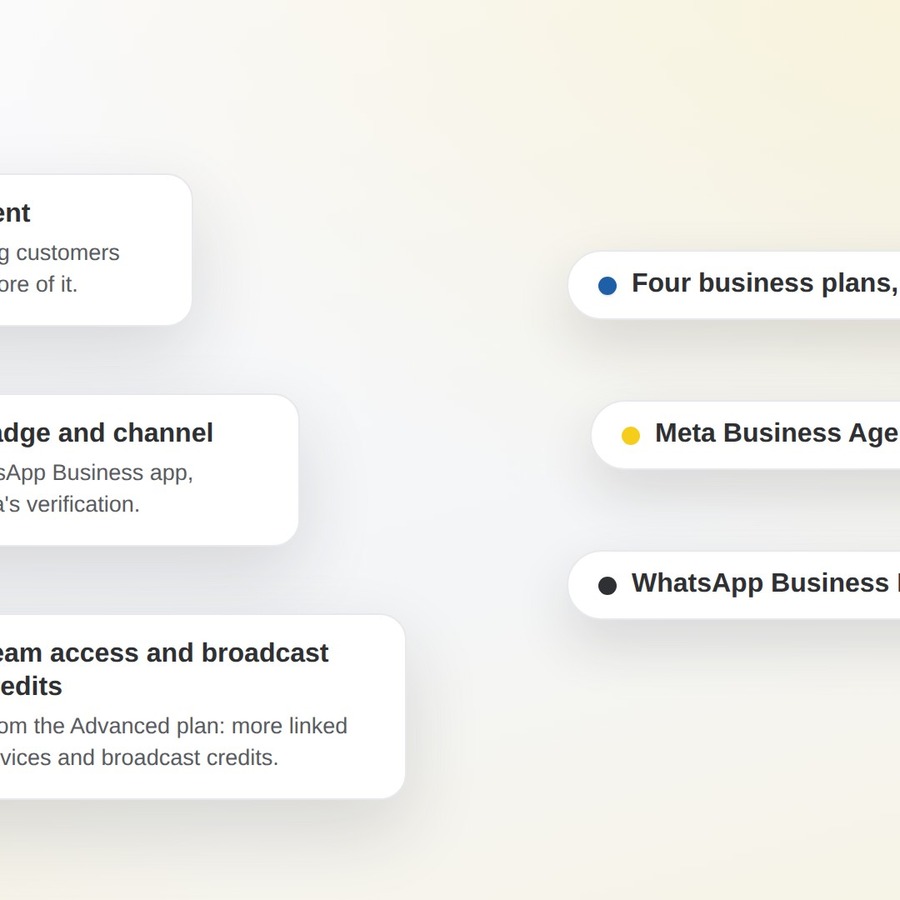
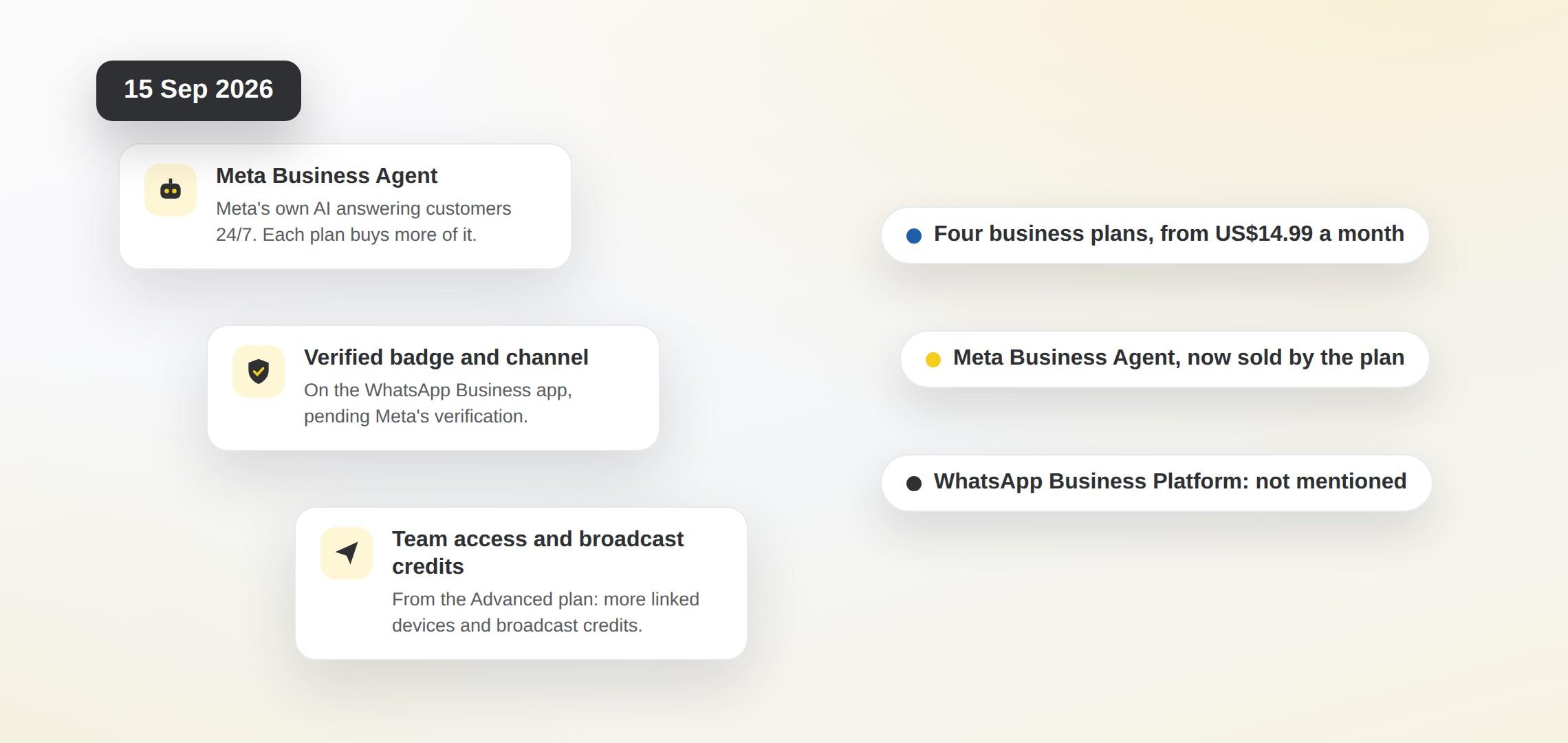
On 15 September 2026 Meta launched Meta One, a subscription across its apps with four plans for creators and businesses, from US$14.99 to US$499 a month. On WhatsApp they add more Meta Business Agent replies, a verified badge on the WhatsApp Business app and, from the Advanced plan, team access and broadcast credits. Here is what each plan includes and what it means if you already use the WhatsApp Business Platform.
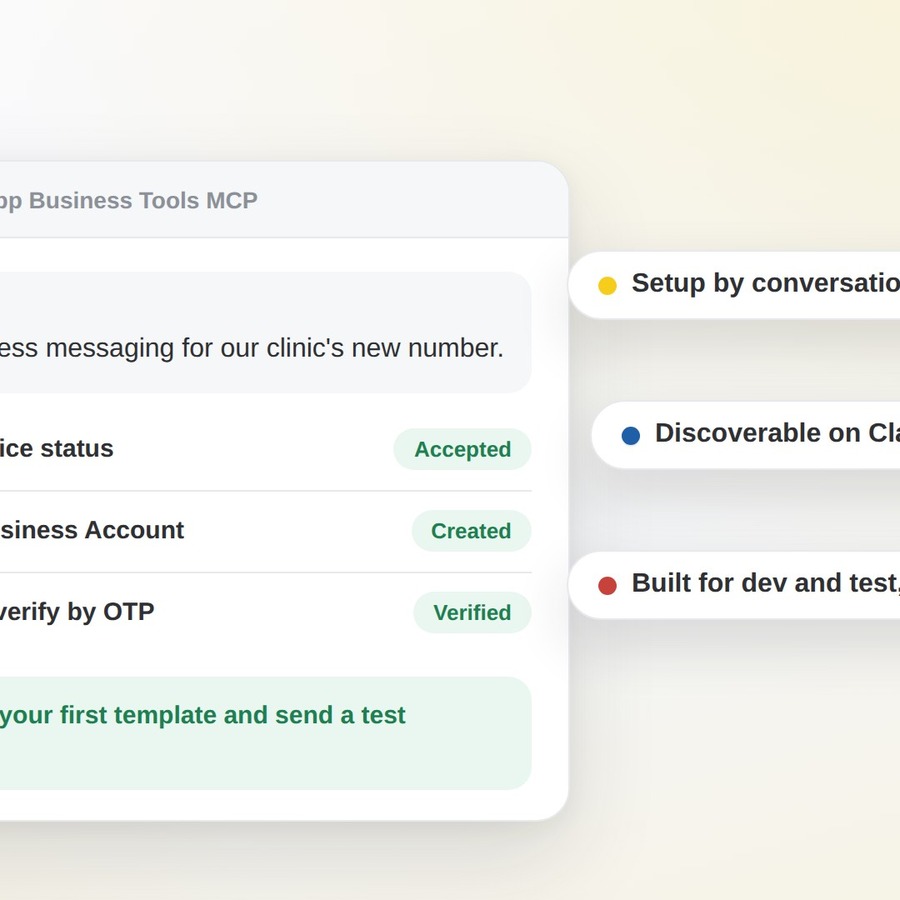
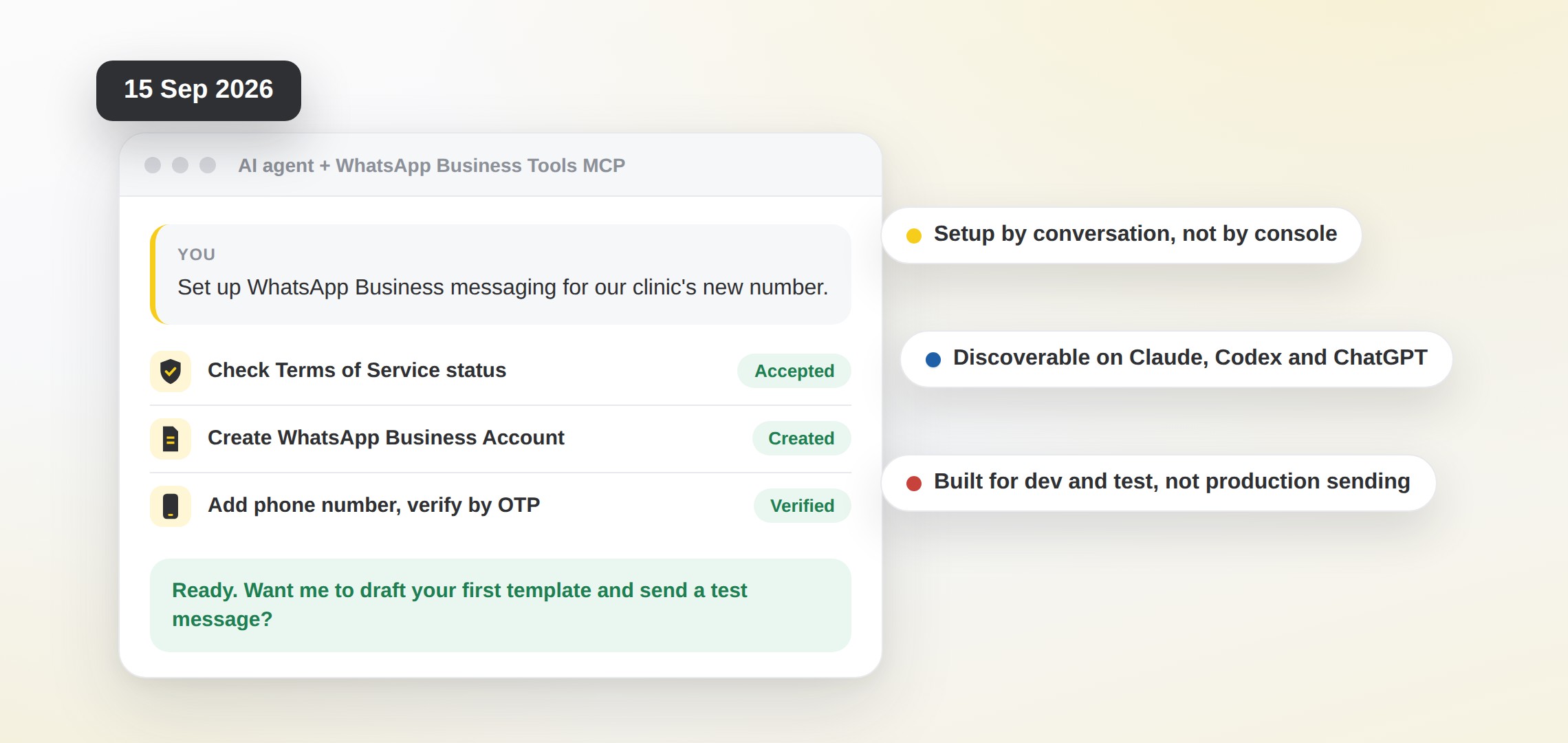
On 15 September 2026 Meta released WhatsApp Business Tools MCP, a Model Context Protocol server that lets an AI coding agent (Meta names Claude, Cursor, Codex and ChatGPT) set up WhatsApp Business messaging by conversation: create a WhatsApp Business Account, verify a phone number, register it for the Cloud API, draft and track templates, send test messages and configure webhooks. Meta scopes it to development and testing, not production sending at scale.
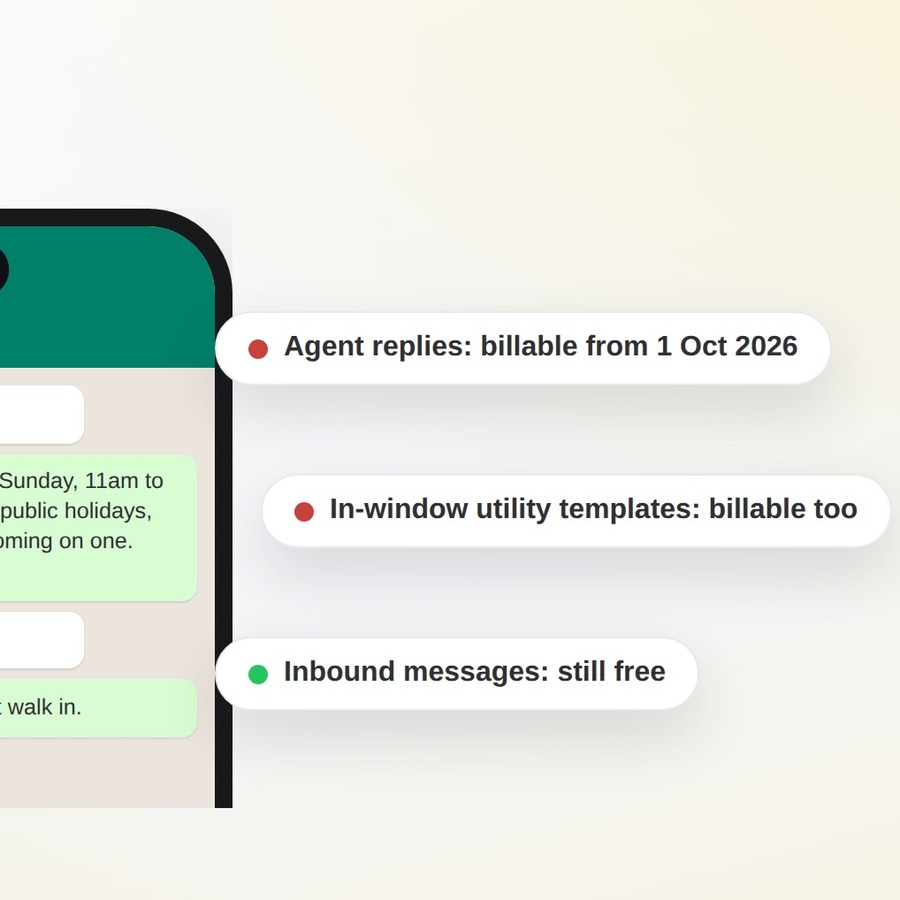
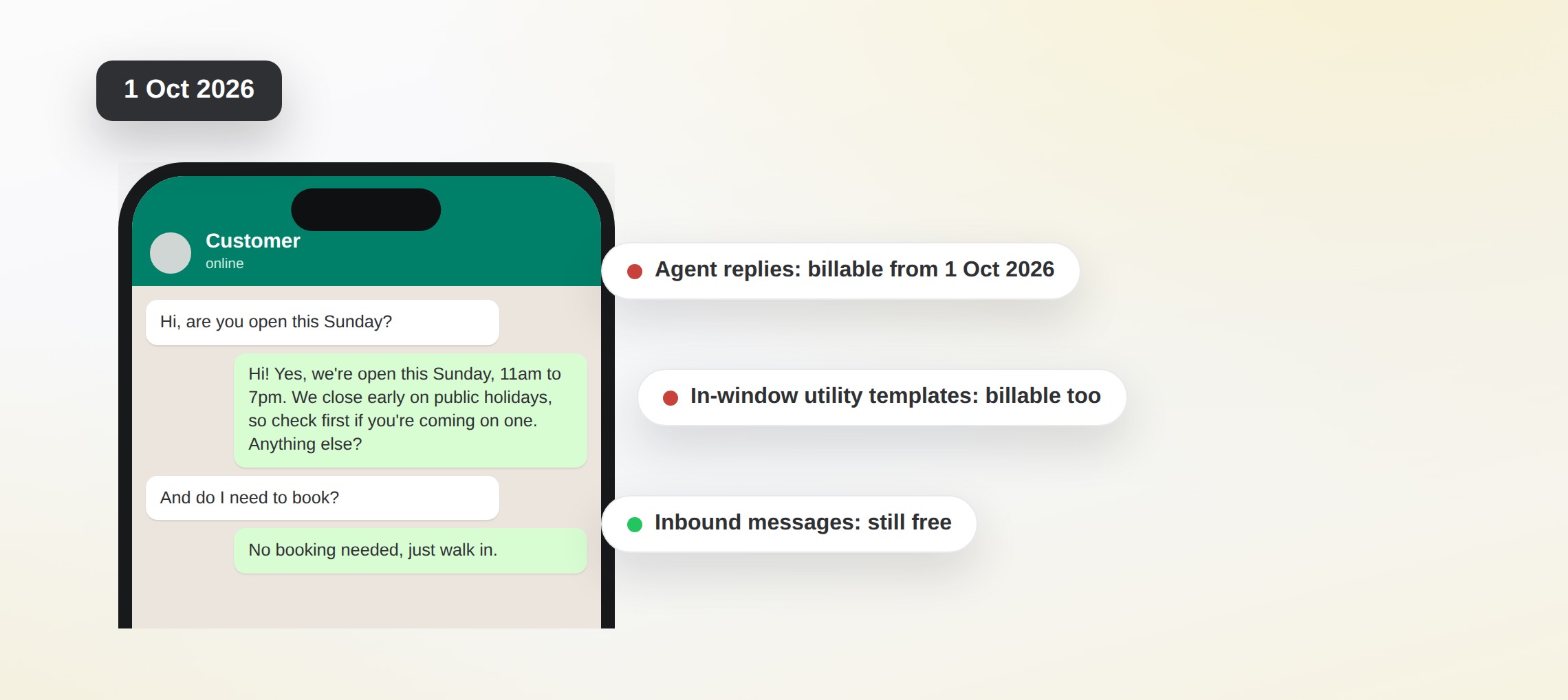
On 1 October 2026 Meta starts charging for two things that cost nothing today: the free form replies your team sends inside the 24 hour window, and utility templates sent in reply to a customer. Every message you send becomes a line item. Seven practices that cut the bill, from how a reply is typed to which channel the question should have arrived on.
Hong Kong's Personal Data (Privacy) Ordinance defines direct marketing to include soliciting donations for charitable purposes, so a fundraising broadcast is regulated in the same way as a commercial promotion. NGOs must notify supporters, obtain consent, offer a free opt-out and stop on request. This playbook covers list building, WhatsApp template categories and a pre-send compliance check.
A margin call is a delivery problem before it is a credit problem: the client has hours to fund or elect, and email is not read in time. Brokers solve it with an approved Utility template that reaches the client, a reply routed into a supervised, retained record rather than a personal handset, and a documented escalation path when no response arrives before the cut-off.
A vaccination reminder on WhatsApp is an opt-in message telling a patient a dose or seasonal shot is due, sent through the WhatsApp Business Platform using an approved template. This guide explains which template category applies, how WhatsApp compares with SMS and email for health campaigns, what the PDPO and PDPA require when the message reveals a health context, and how to sequence a campaign.
A pre-approved loan offer flow on WhatsApp sends an eligible borrower a conditional offer, captures their response in the same thread, and hands a qualified applicant to a human for verification. For Hong Kong lenders the decisions that matter are template classification, the consent record behind the send, the disclosures required under the Money Lenders Ordinance, and where the automated path must stop.
Flag day and street fundraising in Hong Kong depend on coordinating hundreds of volunteers across districts on a single morning, often in changing weather. This guide explains which WhatsApp tool fits each job, how to reach every volunteer without exposing personal numbers, what the PDPO expects of volunteer and donor data, and a countdown runbook for the four weeks before collection day.
A clinic booking system on WhatsApp captures the request in chat, checks real availability, holds the slot and confirms it back to the patient in the same thread. This guide covers the three booking architectures Hong Kong clinics use, how two-way calendar sync prevents double-booking, how to design the confirmation and reschedule sequence, and the consent rules that apply under the PDPO.
An IPO allotment notification tells a retail client whether their subscription was successful, how many shares were allotted and when unused funds are returned. Hong Kong brokerages increasingly send these as approved WhatsApp Utility templates rather than phone calls, because the results window is short, volumes spike, and every message sent has to be reconstructable for the SFC and under the PDPO.
Lab results can be delivered through WhatsApp safely when the message is a notification, not the result itself. The workflow that holds up under Hong Kong's PDPO and Singapore's PDPA sends an approved Utility template telling the patient a report is ready, verifies identity before release, and hands the clinical content over through an authenticated channel with a clinician reviewing abnormal findings first.
Volunteer management on WhatsApp means rostering shifts, confirming attendance and briefing people on the channel they already read. This guide compares personal WhatsApp, groups, broadcast lists and the WhatsApp Business Platform for Hong Kong NGOs, explains the consent and disclosure obligations the PDPO places on volunteer contact data, and sets out a rollout that starts with a single programme.
Governed AI in customer service means an assistant that can only answer from approved sources, inside defined topic boundaries, with every reply logged and a named human accountable for escalation. For patient and donor inquiries in Hong Kong and Singapore, the controls that matter are grounding, scope limits, escalation triggers, audit logging and retention. This guide compares the three deployment patterns and how to choose.
Financial advisors in Hong Kong can message clients on WhatsApp, but only a business number on the WhatsApp Business Platform keeps the conversation supervised, logged and owned by the firm. This guide explains how a personal handset differs from a governed business number, what record-keeping and consent obligations apply under the SFC regime and the PDPO, and how to migrate a client book.
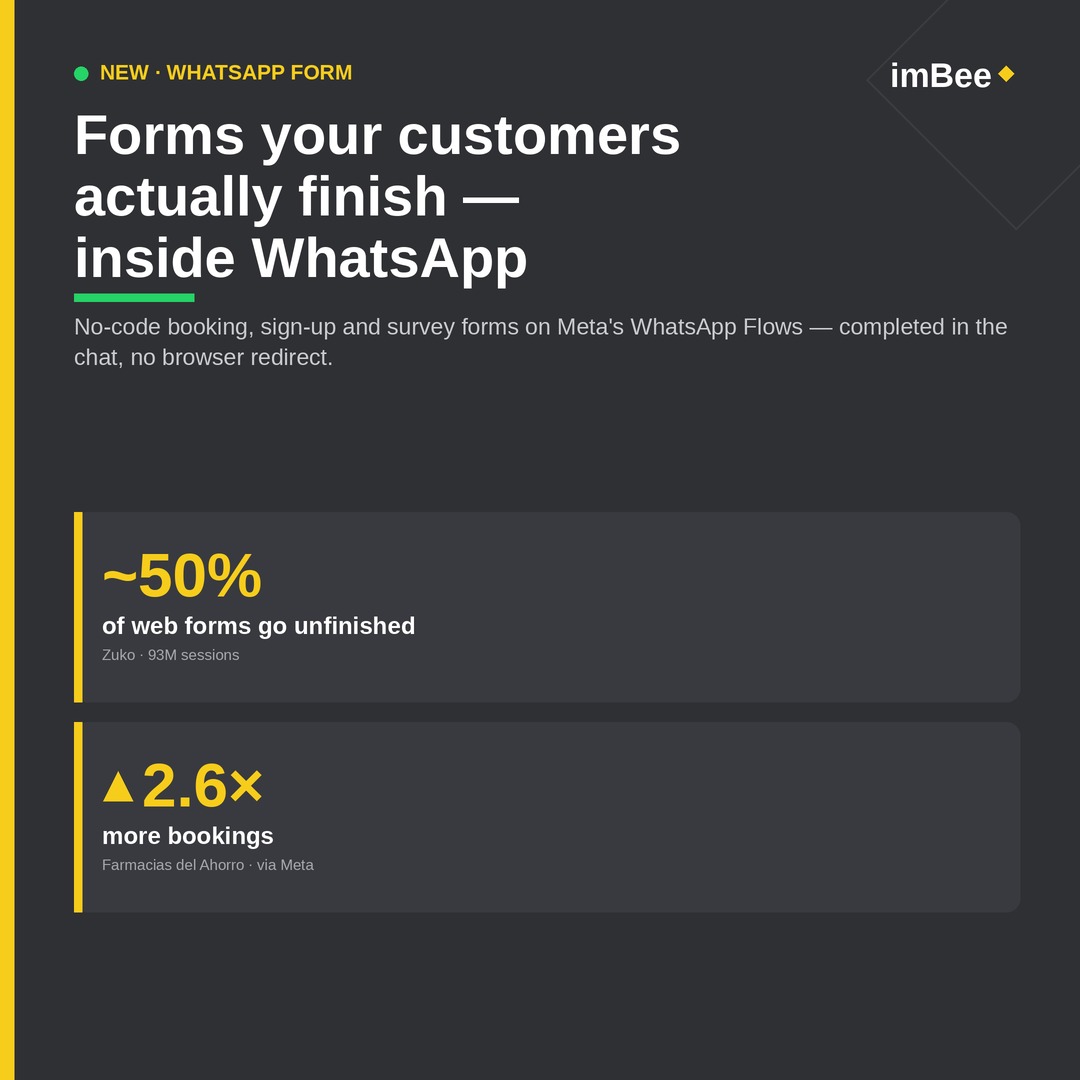
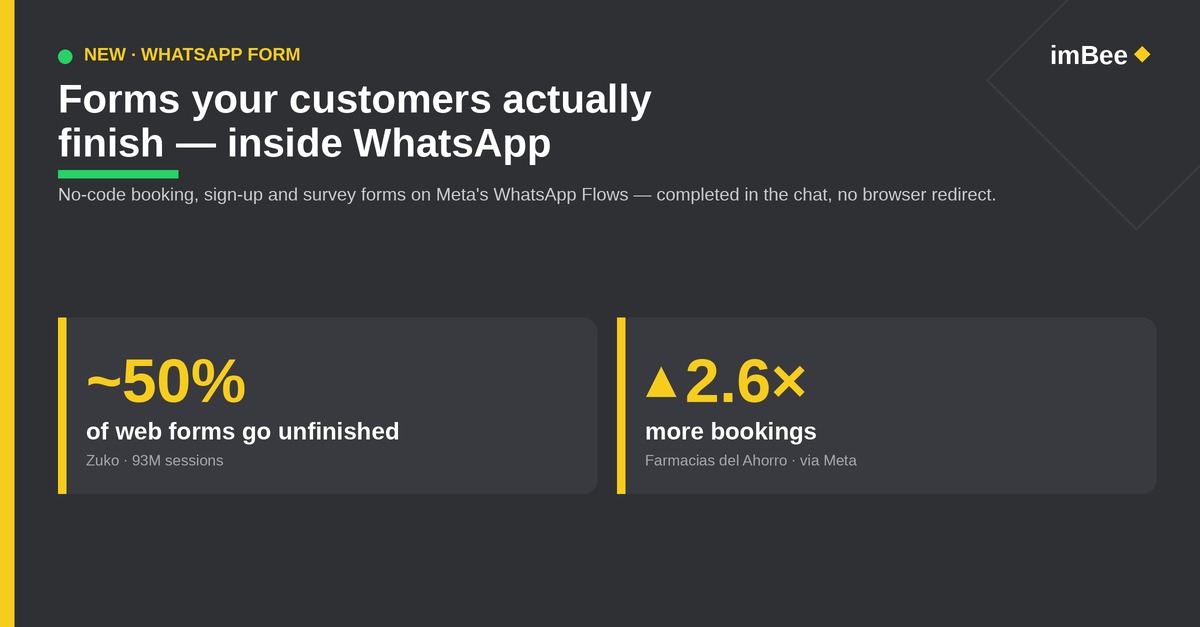
WhatsApp Form is imBee's no-code form builder, built on Meta's WhatsApp Flows. It collects structured data — bookings, patient intake, surveys and lead qualification — inside the WhatsApp chat, with no browser redirect. Forms support text, number, date and select fields with conditional logic, encrypted responses, and exportable records sent from the inbox or a workflow.
A nonprofit CRM is the system of record for supporters: the constituent record, the giving history, the campaign behind each gift, and the consent state for every channel. This guide explains what a nonprofit CRM does, how the four common setups in Hong Kong and Singapore compare, what to check before buying, and how to connect messaging channels to the donor record.
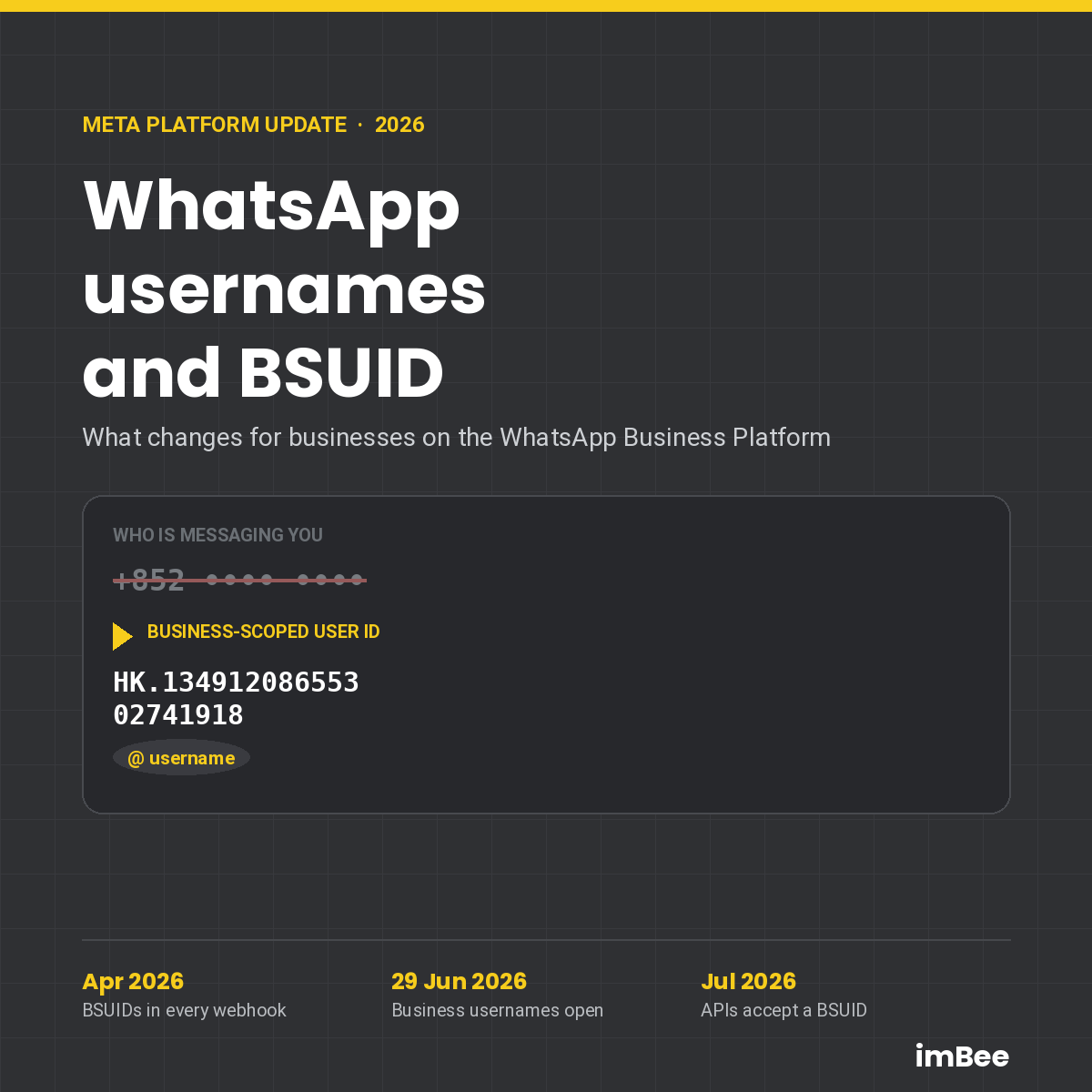
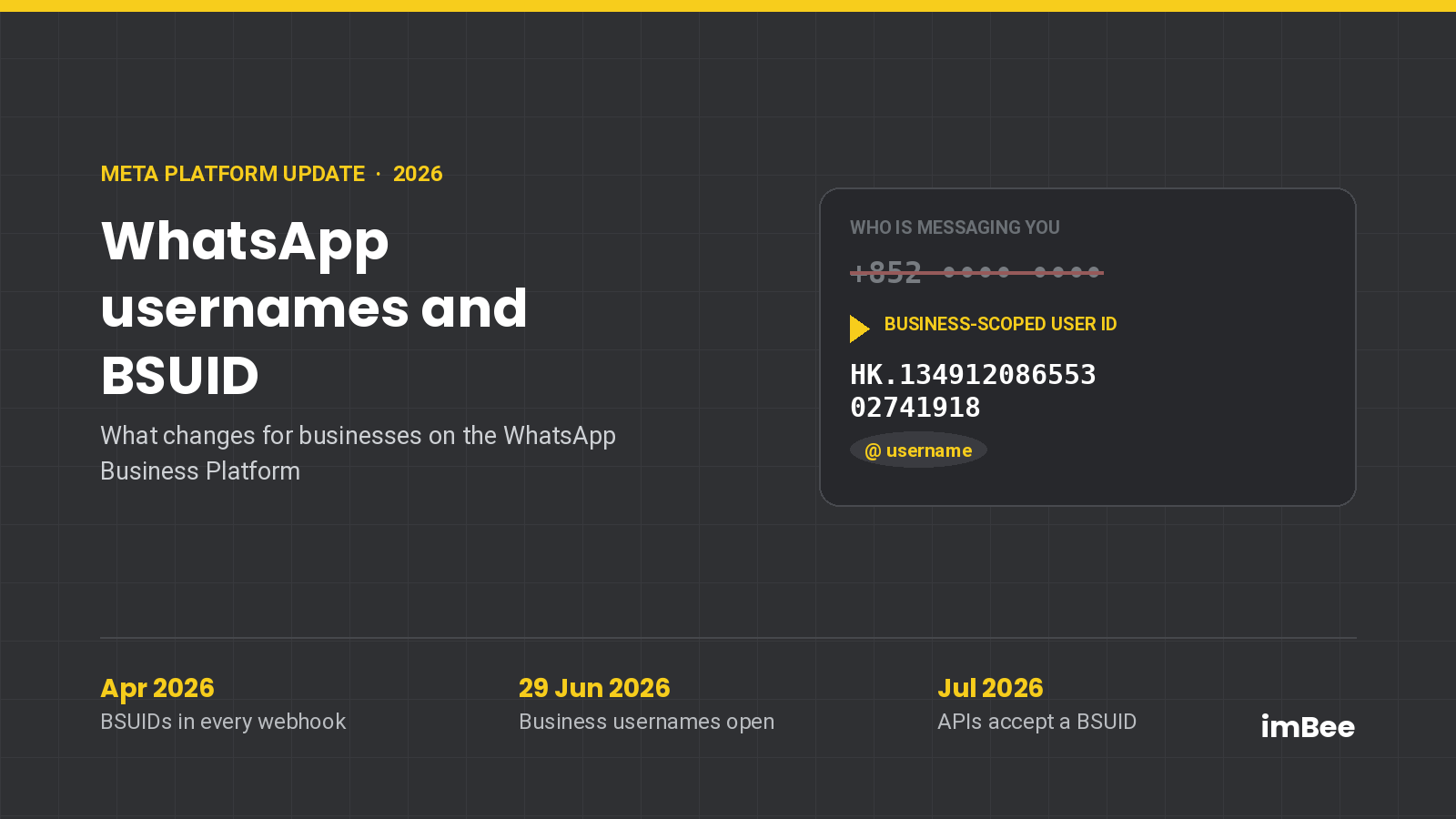
A BSUID (business-scoped user ID) is the identifier Meta now sends with every WhatsApp webhook so businesses can recognise a customer who has adopted a WhatsApp username and hidden their phone number. It is unique to your business portfolio, prefixed with a country code, and has appeared in webhooks since April 2026. Store it beside the phone number.
WhatsApp for hospitals works as a coordination channel, not a clinical record. Meta's policy bars telemedicine and health information where local rules demand heightened safeguards, so compliant programmes send appointment reminders, medication nudges, discharge logistics and portal links across a five-checkpoint follow-up ladder, escalating every red-flag reply to a named human within one shift.
NGO donor communication on WhatsApp covers three jobs: instant donation receipts, impact updates between appeals, and recurring-gift nudges that recover failed payments. In Hong Kong a fundraising appeal counts as direct marketing under the PDPO, so consent comes first. This guide covers opt-in, Section 88 and IPC tax receipts, message templates, retention ladders and donor-data governance.
A loan repayment reminder is a scheduled, opt-in message telling a borrower an instalment is due or overdue and how to pay. On WhatsApp, licensed Hong Kong lenders send them as approved utility templates, then escalate through a fixed ladder that stays inside Licensing Condition 10 of the Money Lenders Ordinance (Cap. 163).
The SFC requires licensed corporations to keep complete, tamper-resistant records of client communications. Under its 2018 instant-messaging circular, a firm may use WhatsApp for client orders only if it has full control over recording and retention, keeping order messages for at least two years; client agreements and business records must be kept for seven years under the Keeping of Records Rules (Cap. 571O).
Yes — Hong Kong licensed money lenders can message customers on WhatsApp, provided they follow the Money Lenders Ordinance (Cap. 163) and the PDPO (Cap. 486). That means capturing opt-in, obtaining direct-marketing consent before loan offers, including required risk warnings in promotional content, honouring opt-outs immediately, structuring repayment reminders professionally, and keeping complete records of every conversation for compliance review.
Healthcare patient messaging beyond SMS means using secure, channel-rich platforms like the WhatsApp Business Platform alongside SMS, email and web chat to send appointment reminders, results, recalls and triage. In APAC, the right setup is PDPO, PDPC and ISO/IEC 27001 compliant, cuts no-shows, and unifies every patient conversation in one auditable inbox.
WhatsApp appointment reminders let Hong Kong clinics confirm bookings, send 72-hour and same-day nudges, and offer one-tap Confirm or Reschedule buttons. Clinics need the WhatsApp Business API, Meta-approved utility templates in English and Cantonese, PDPO-compliant opt-in, and a shared inbox for replies. Studies show reminder systems cut no-shows by roughly 25-40%, recovering thousands of dollars in monthly consultation revenue.
To set up a WhatsApp auto-reply for business, pick your platform first. The free WhatsApp Business app covers one greeting message and one scheduled away message. The WhatsApp Business API adds keyword rules, business-hours routing, multi-agent inboxes and AI-generated answers. Write short templates that state reply times, add a human escape route, test on a real handset, then review response analytics weekly.
WhatsApp for healthcare in Hong Kong lets clinics and hospitals message patients on the channel they already use, while staying compliant with the Personal Data (Privacy) Ordinance (Cap. 486). Common use cases include appointment reminders, confirmations and rescheduling, pre-visit forms, results-ready alerts, prescription refills, recall and wellness campaigns, billing reminders, triage routing, and post-visit feedback — all secured to ISO/IEC 27001 standards.
A patient engagement platform is software that unifies every patient conversation — appointment reminders, triage, follow-ups, recalls, and billing — across WhatsApp, WeChat, SMS, and web chat in one secure inbox. For APAC healthcare providers in 2026, the seven capabilities that matter most are omnichannel messaging, automated reminders, AI triage, EMR integration, approved message templates, audit-ready security, and PDPO, PDPA, and ISO 27001 compliance.
Debt collection software automates payment reminders, tracks promises to pay, and routes overdue accounts across channels such as WhatsApp, SMS and email. For APAC lenders in 2026, the strongest platforms pair omnichannel messaging with compliant message templates, self-service payment flows, audit-ready logging and ISO 27001 security, turning manual chasing into measurable, policy-aligned recovery.
A WhatsApp broadcast sends one message to up to 256 saved contacts on the WhatsApp Business app, with no analytics. A WhatsApp campaign runs on the WhatsApp Business Platform (API), uses Meta-approved message templates, reaches opted-in audiences at scale, and reports delivery, read, and click metrics. Hong Kong marketers choose campaigns for compliant, measurable mass messaging under the PDPO.
ISO/IEC 27001 covers customer messaging through nine Annex A control families: supplier relationships, incident management, privacy, secure authentication, access restriction, data masking, logging, cryptography, and network security. An APAC messaging platform meets the standard when it documents these controls against HKMA, PCPD, MAS TRM, and PDPC obligations, and proves them via a Statement of Applicability and annual audit.
WhatsApp for banks in APAC in 2026 means using the WhatsApp Business Platform (also called the WhatsApp Business API, WABA, or WhatsApp Cloud API) for customer service, onboarding notifications, transaction alerts, card delivery updates, fraud warnings, loan offers, and collections. Hong Kong, Singapore, Malaysia, and Indonesia financial firms must layer ISO/IEC 27001, HKMA, SFC, MAS, and PDPA controls on top to send messages legally.
在 2026 年選擇WhatsApp API 或本地部署 API 時,需考量八大因素:Meta 的停用時程、總擁有成本、亞太地區(APAC)用戶的區域延遲、是否符合香港金管局(HKMA)/新加坡金融管理局(MAS)/個人資料私隱專員公署(PCPD)/新加坡個人資料保護委員會(PDPC)的合規要求、功能對等性(流程、WhatsApp 、商務通話)、資料駐留地、從現有 BSP 架構遷移所需的努力,以及營運開銷。 對於香港及東南亞企業而言,雲端 API 目前在幾乎所有方面都佔據優勢。
A 2026 guide for Singapore CX and operations leaders evaluating the WhatsApp Business Platform (API): the per-message pricing model, the four Meta conversation categories, an eight-step Business Manager setup, PDPA Do Not Call obligations, MAS-aligned record-keeping, ISO/IEC 27001-grade security, and the BSP evaluation criteria that matter most when shortlisting vendors in Singapore.
A 2026 cost breakdown for Hong Kong enterprises pricing the WhatsApp Business Platform (API): Meta's per-conversation rates across the four template categories (Marketing, Utility, Authentication, Service), Business Solution Provider platform fees, one-time setup, and the budget line items most HKMA and SFC buyers underestimate when sizing their first deployment.
Announcing WhatsApp Coexistence on imBee: A new capability that allows businesses to use the WhatsApp Business App and imBee’s API platform simultaneously on the same phone number. Learn how to scale your automation without losing the personal touch or chat history.
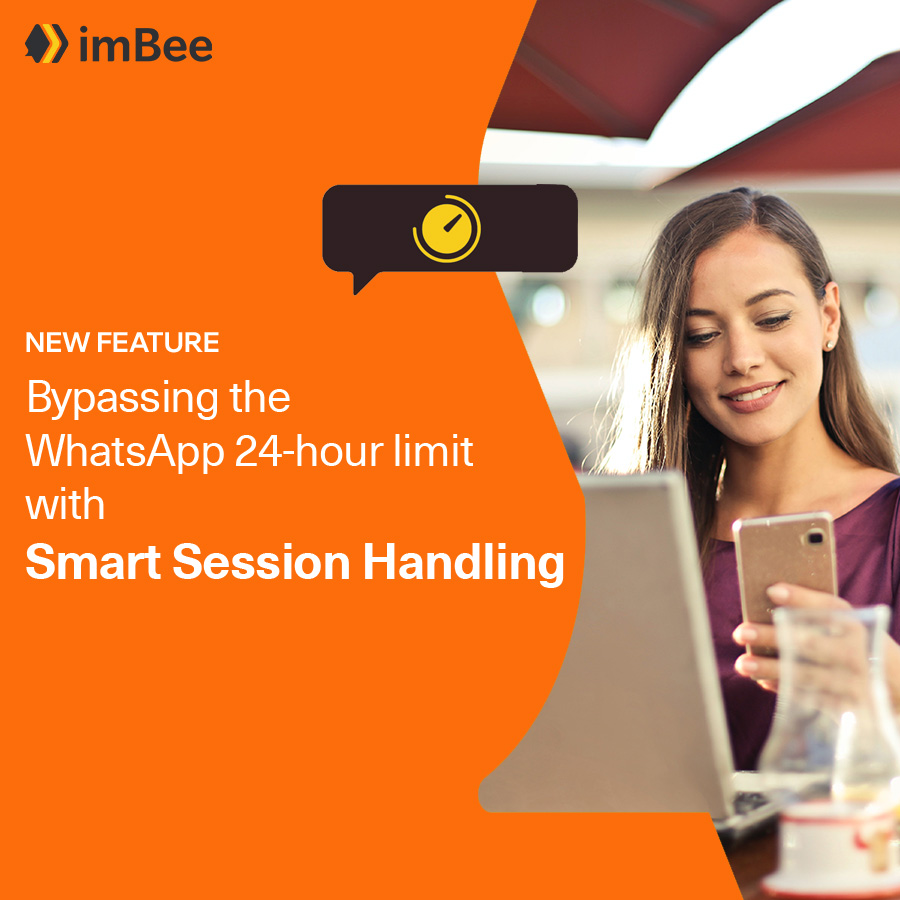
Many businesses using WhatsApp Business have faced a challenge – the 24-hour rule. But now, there's a significant new capability: imBee's new feature, Smart Session Handling.
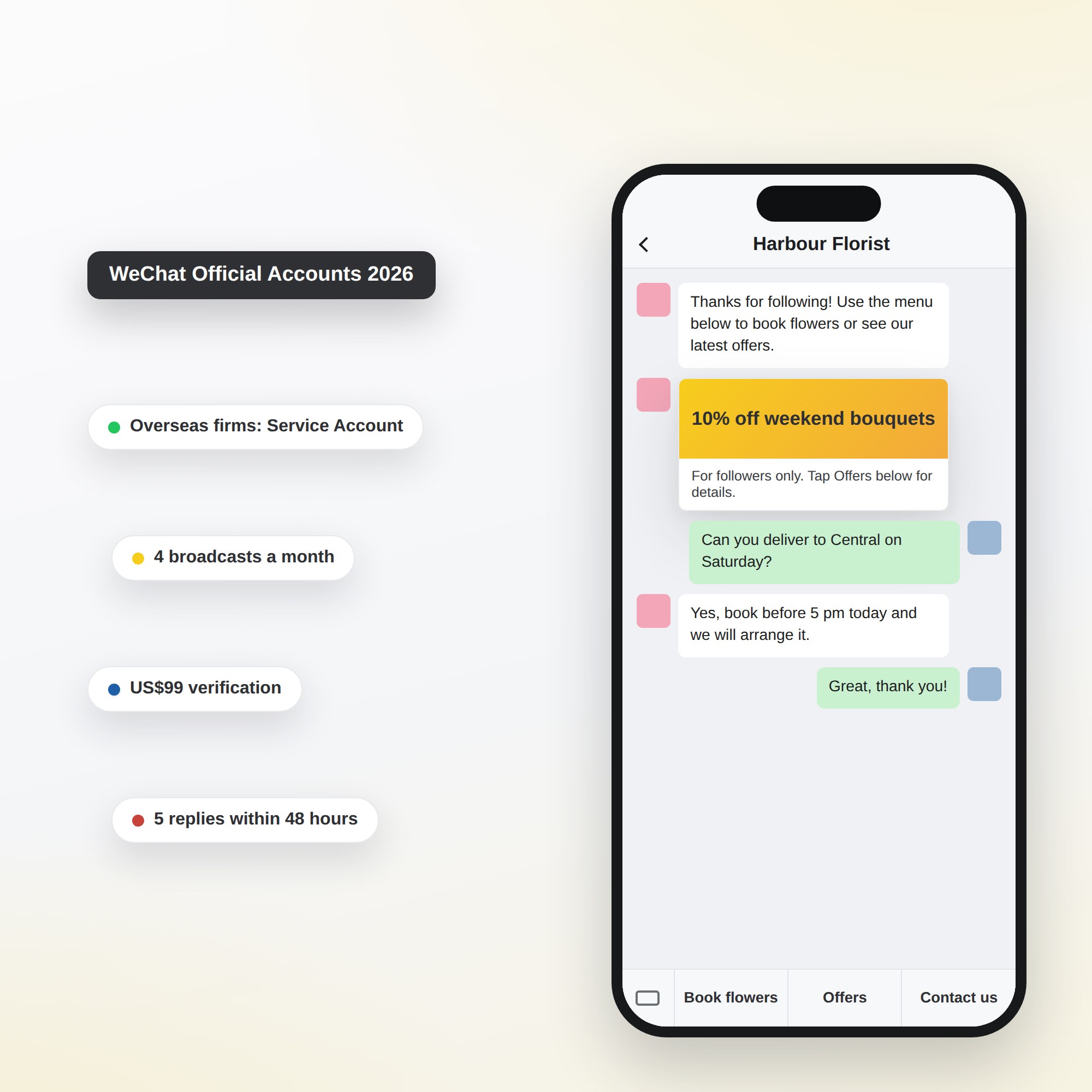
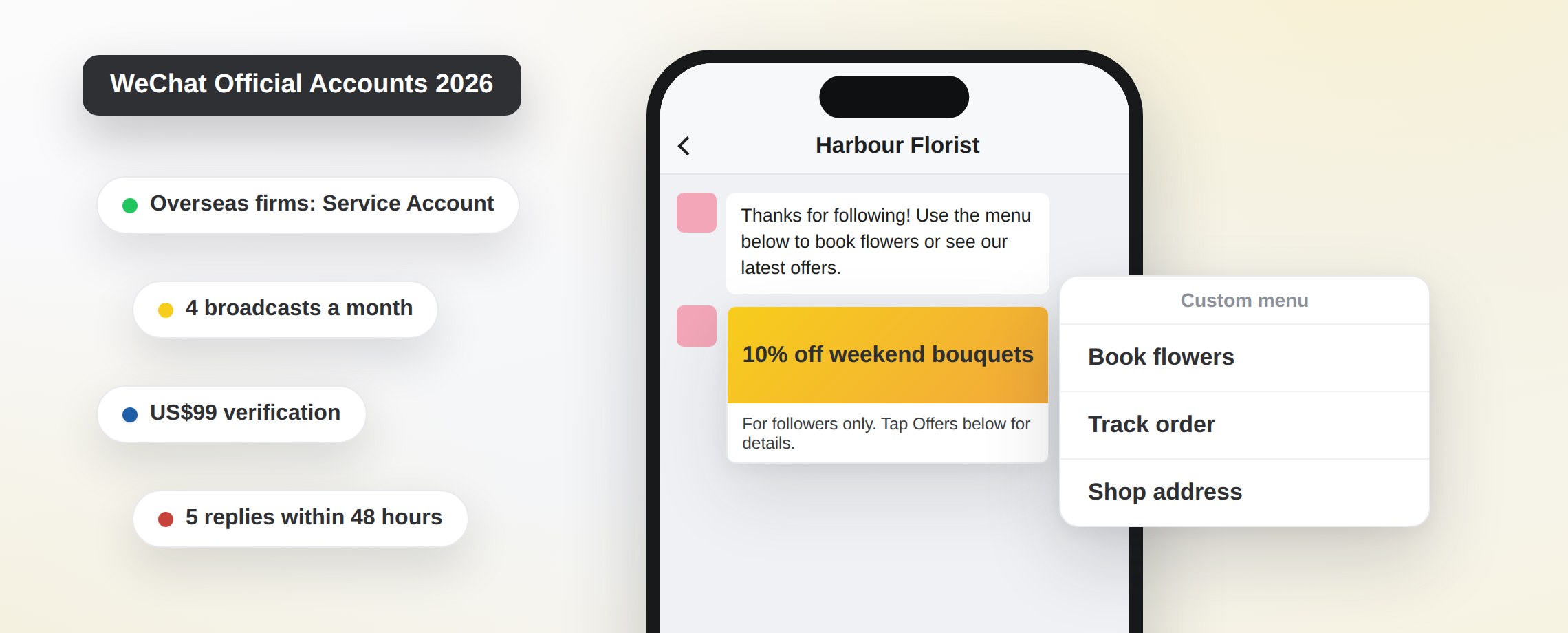
WeChat's Official Accounts Platform lets a business publish to and message followers. It offers two types: the Official Account (formerly Subscription Account), with one broadcast a day, and the Service Account, with four a month and more service features once verified. Overseas entities are advised to open a Service Account; overseas verification costs US$99 per application.
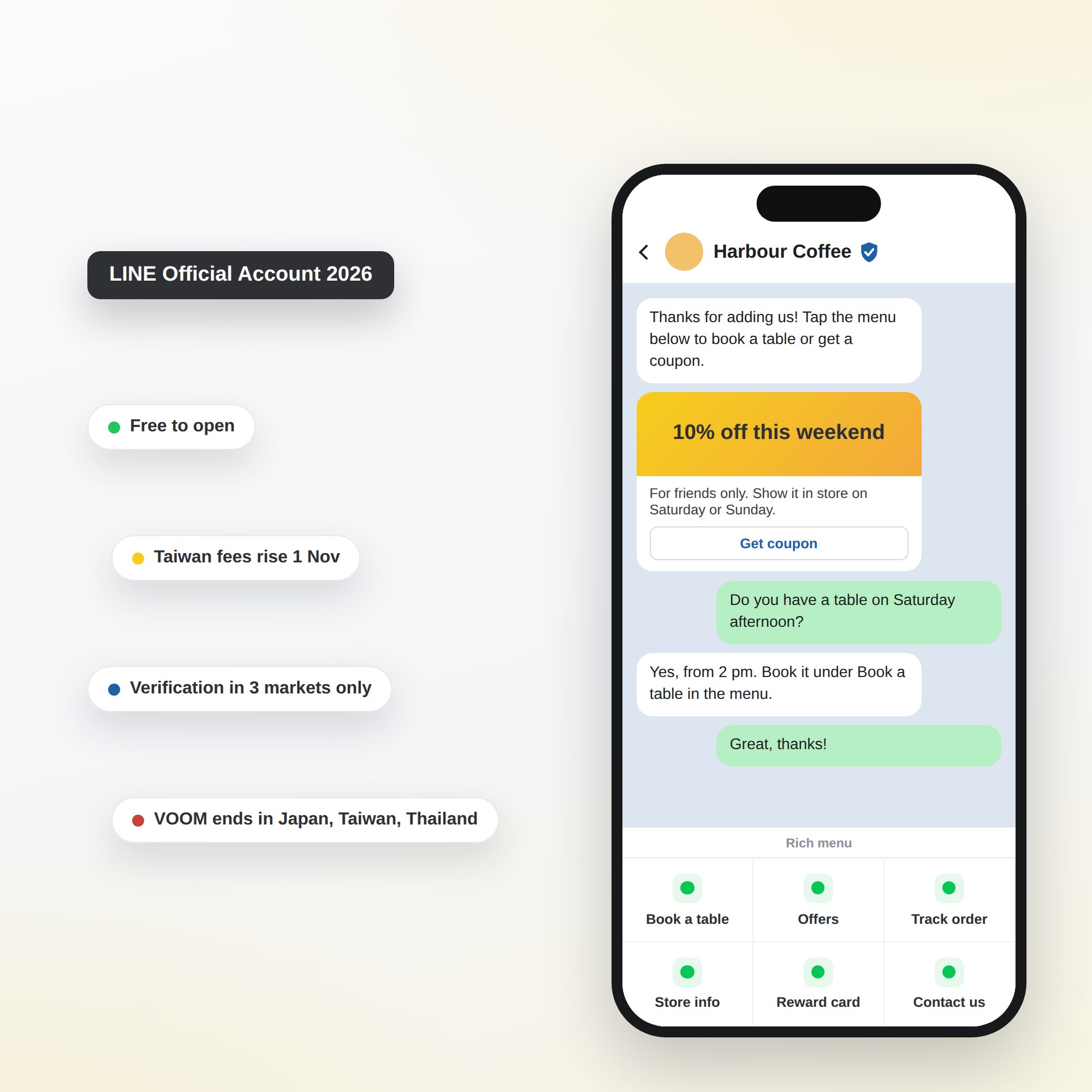
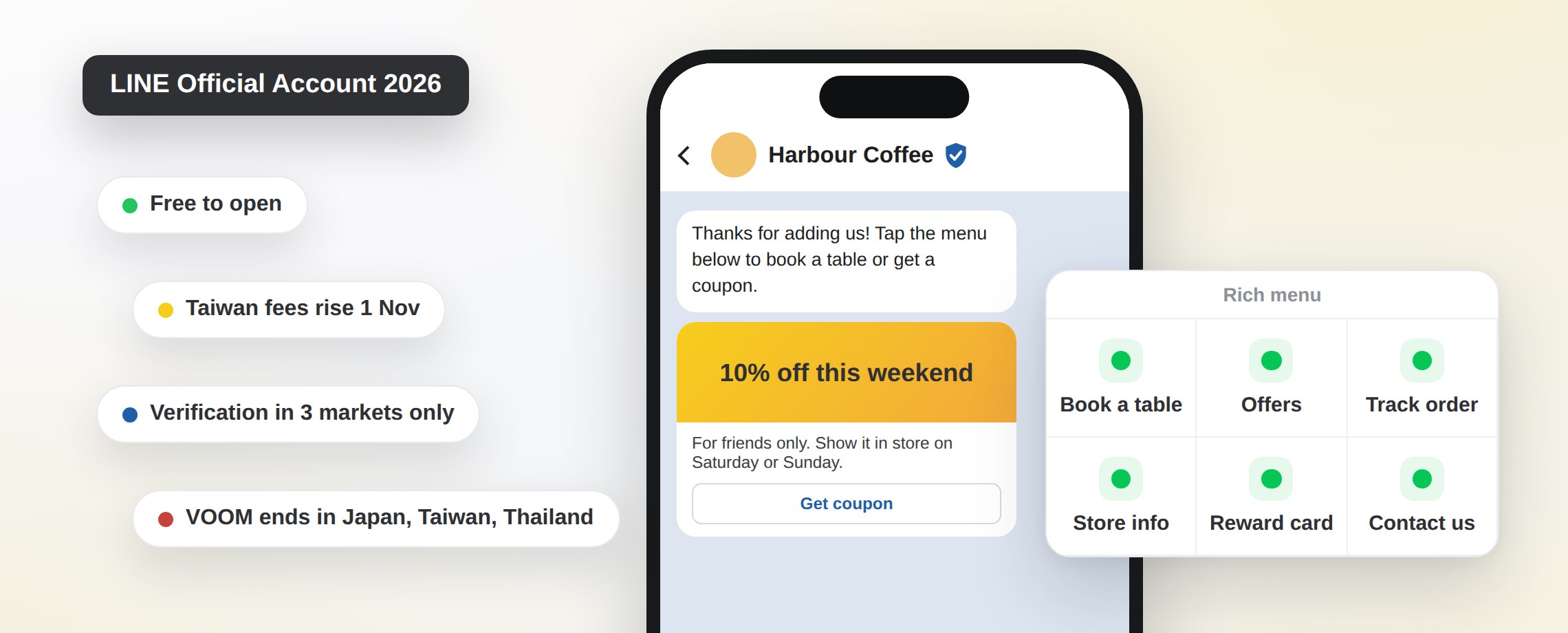
A LINE Official Account is a business account inside LINE that is free to open. Plans depend on the country or region registered for your business: Japan, Taiwan and Thailand have their own, and most places outside the EU use US dollar plans from free to US$150 a month. Chat and in-time replies are free; broadcasts and API pushes count. Only three markets offer verification.
Signal 的 21 個隱藏技巧,可解鎖進階隱私功能,包括訊息自動消失、螢幕鎖定、轉接通話、發信人隱藏,以及「備忘錄」聊天室。本指南涵蓋了 Signal 進階使用者在 Android、iOS 和桌面版上進行端對端加密通訊時所倚賴的所有快捷方式,並針對重視機密性和資料保護的團隊,提供適合企業使用的設定。
WhatsApp 是透過 QR 碼在 web.whatsapp.comWhatsApp 瀏覽器版本,而WhatsApp 則是可安裝於 Windows 或 Mac 系統的應用程式。兩者皆讓使用者能透過電腦傳送訊息、分享檔案及進行通話,且對話內容會與行動裝置帳戶同步。企業通常會使用WhatsApp 讓客服人員快速存取服務。
WhatsApp Business API is a programmatic interface designed for enterprises with high message volume. Unlike the consumer WhatsApp Business app, the API supports CRM integration, multi-agent inboxes, broadcast at scale, and structured templates. APAC enterprises typically partner with an Official Meta Technology Partner like imBee for onboarding, billing, and ISO 27001 compliance.
2020年11月3日
-
5 分鐘閱讀
Talk to someone who runs this every day
See how enterprise teams across Hong Kong and APAC run WhatsApp, WeChat and Instagram from one governed inbox.

























































.png)
.jpeg)